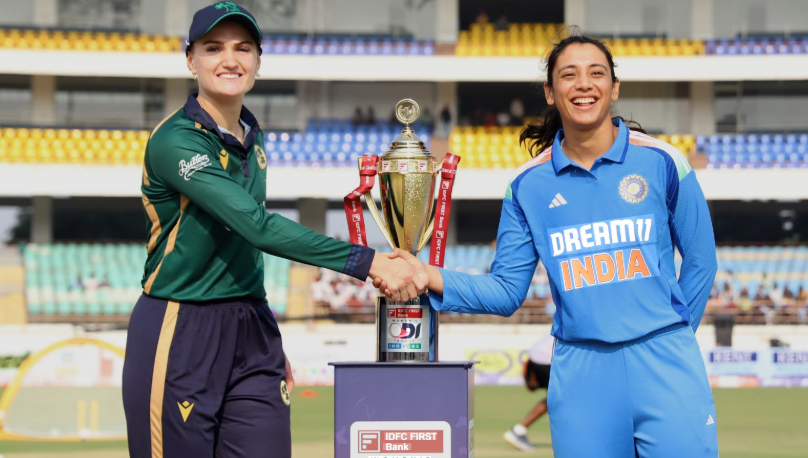
The rivalry between Ireland Women’s National Cricket Team and India Women’s National Cricket Team reflects a clear contrast in experience, structure, and international exposure. From the very first meeting, India Women established dominance through disciplined batting, tactical bowling, and strong match awareness, while Ireland Women focused on learning and building resilience against a top tier side. Over time, this fixture has produced key scorecards that highlight shifts in momentum, individual brilliance, and evolving competitiveness. Each encounter tells a story of pressure, adaptation, and growth, making this matchup an important chapter in women’s international cricket development and competitive evolution.
Latest Matches Table
Date
Format
Venue
Winner
Margin
15 January 2025
ODI
Rajkot
India
304 runs
12 January 2025
ODI
Rajkot
India
116 runs
10 January 2025
ODI
Rajkot
India
6 wickets
20 February 2023
T20I
Gqeberha
India
5 runs (DLS)
15 November 2018
T20I
Providence
India
52 runs
All-Time Head-to-Head Record Table
Format
Matches Played
India Wins
Ireland Wins
No Result / Ties
One-Day Internationals (ODI)
15
15
0
0
Twenty20 Internationals (T20I)
2
2
0
0
Total Overall
17
17
0
0
All-Time Batting Leaders Table
Player
Team
Matches
Runs scored
Highest Score
Batting Average
Smriti Mandhana
India
5
321
135
64.20
Deepti Sharma
India
6
288
188
57.60
Jemimah Rodrigues
India
4
215
155
71.66
Pratika Rawal
India
3
277
154
92.33
Gaby Lewis
Ireland
5
133
50
26.60
All-Time Bowling Leaders Table
Player
Team
Matches
Wickets taken
Best Bowling
Economy Rate
Deepti Sharma
India
6
13
4/46
3.52
Shikha Pandey
India
4
8
3/16
3.10
Poonam Yadav
India
3
6
3/30
3.45
Orla Prendergast
Ireland
4
5
2/71
6.85
Laura Delany
Ireland
5
4
3/33
5.92
Rivalry Foundations and Early International Gap in Standards
Rivalry Foundations and Early International Gap in Standards shows how India Women entered the contest with a far more developed structure compared to Ireland Women. India Women had already built a strong domestic system with consistent international exposure, while Ireland Women were still developing their global competitiveness. This gap was clearly visible in early encounters where India controlled most phases of the game through disciplined batting and structured bowling. Ireland struggled to match the intensity, especially in pressure overs where experience played a key role. The difference in fitness levels, shot selection, and tactical awareness defined the early phase of this rivalry. India’s ability to rotate strike and build partnerships created scoreboard pressure, while Ireland focused more on survival and learning. Over time, this gap slowly reduced but early matches were heavily one sided in terms of execution and confidence levels.
India Strength
Ireland Challenge
Key Difference
Match Impact
Strong structure
Developing system
Experience gap
One sided games
Better exposure
Limited exposure
Confidence level
Early dominance
Tactical clarity
Learning phase
Strategy depth
Pressure buildup
Consistent execution
Inconsistency
Skill gap
Scoreboard control
First Recognised Clash Between Ireland Women and India Women
First Recognised Clash Between Ireland Women and India Women marked the official beginning of a competitive international storyline. India Women entered the match with confidence and a clear game plan built around early wickets and steady batting control. Ireland Women, on the other hand, aimed to gain respect through resistance and discipline. The match quickly showed India’s superior control over key moments, especially in powerplay overs where early breakthroughs set the tone. Ireland struggled to convert starts into meaningful partnerships, which added scoreboard pressure. India’s bowlers used variations effectively, forcing errors and restricting scoring opportunities. This first clash was not just about result but about setting a benchmark for future meetings. It established India as the dominant side while Ireland gained valuable exposure to top level international cricket intensity.
Match Phase
India Approach
Ireland Approach
Outcome
Powerplay
Early wickets
Defensive start
India control
Middle overs
Spin pressure
Slow buildup
Batting struggle
Death overs
Tight bowling
Limited attack
Low total
Final result
Dominant finish
Learning experience
One sided
Batting Philosophy Clash Between Both Teams
Batting Philosophy Clash Between Both Teams highlights two completely different approaches to constructing innings. India Women rely on structured batting with strong top order stability and calculated aggression. Their batters focus on building partnerships, rotating strike, and accelerating in the final overs. Ireland Women, however, often depend on individual resilience and counter attacking shots when under pressure. This contrast creates dramatic scorecard differences in almost every meeting. India’s ability to avoid collapses gives them consistent totals, while Ireland’s inconsistency in middle overs often leads to reduced scoring momentum. In several matches, Ireland showed flashes of brilliance but struggled to sustain pressure for long periods. India’s disciplined approach allowed them to control game tempo and force Ireland into defensive positions. This philosophical gap remains one of the defining aspects of this rivalry.
Batting Aspect
India Women
Ireland Women
Impact
Top order
Stable
Inconsistent
Early control
Strike rate
Balanced
Aggressive bursts
Momentum shifts
Partnerships
Strong
Limited
Score difference
Pressure handling
Calm
Vulnerable
Collapse risk
Bowling Units and Tactical Execution Under Pressure
Bowling Units and Tactical Execution Under Pressure defines how India Women consistently outperformed Ireland Women through strategic bowling depth. India’s bowling attack is built on variation, including quality spin options and disciplined pace bowling. They focus heavily on building pressure through dot balls and forcing mistakes. Ireland’s bowling attack relies more on swing and early movement but often lacks depth in middle overs. Under pressure, India bowlers execute plans with precision, targeting weak areas and adjusting field placements smartly. Ireland often struggles when partnerships build against them, as wicket taking options become limited. In crucial phases, India’s bowlers show greater composure, especially in defending totals. This tactical difference has repeatedly influenced match outcomes and scorecards in India’s favor.
Bowling Phase
India Strategy
Ireland Strategy
Result
Powerplay
Early attack
Swing focus
Balanced start
Middle overs
Spin control
Defensive bowling
India advantage
Death overs
Precision yorkers
Variation attempts
Pressure buildup
Overall impact
Structured attack
Inconsistent execution
India dominance
Turning Point Matches That Defined the Rivalry Direction
Turning Point Matches That Defined the Rivalry Direction refers to specific encounters where momentum clearly shifted toward India Women. These matches often featured key partnerships or sudden batting collapses that changed the entire flow. In several games, Ireland Women started competitively but lost control during middle overs due to disciplined Indian bowling. India capitalized on these moments with aggressive batting finishes and tight fielding setups. These turning points not only decided matches but also shaped psychological confidence between the teams. Ireland gained experience but struggled to convert competitive starts into wins. India, meanwhile, strengthened their dominance through repeated successful execution in pressure situations. These matches became reference points for future strategies and team planning.
Turning Moment
Situation
Impact
Result
Early wickets
Ireland batting start
Pressure shift
India control
Partnership break
Middle overs
Collapse trigger
Score drop
Death overs surge
India batting
High finish
Winning total
Fielding impact
Run outs
Momentum change
Match seal
Player Impact Performances That Shaped Scorecards
Player Impact Performances That Shaped Scorecards focuses on individual brilliance that influenced match outcomes between both teams. India Women consistently produced standout batting performances from top order players who anchored innings and accelerated when needed. Bowlers also played a crucial role with match defining spells that restricted Ireland’s scoring ability. On the Ireland side, individual batters occasionally delivered fighting innings under pressure, showcasing resilience despite team struggles. However, lack of consistent support often limited their impact on final results. India’s all round contributions gave them a strong edge in most encounters, with players stepping up in both batting and bowling departments. These performances became defining moments in rivalry scorecards and shaped long term outcomes.
Player Type
India Contribution
Ireland Contribution
Match Effect
Batters
High consistency
Individual efforts
Score buildup
Bowlers
Match winning spells
Limited support
Pressure control
All rounders
Strong impact
Occasional role
Balance shift
Fielding
Sharp execution
Improving unit
Run saving
Conclusion
The journey of Ireland Women versus India Women showcases how international cricket gaps can gradually narrow through exposure and experience. India Women have consistently maintained control through superior skill execution, tactical clarity, and depth in both batting and bowling units. Ireland Women, despite early struggles, have shown determination and moments of fightback that reflect their growing cricketing maturity. The scorecards across matches clearly highlight India’s dominance but also Ireland’s progress over time. This rivalry continues to evolve, offering valuable insights into development, pressure handling, and the future direction of women’s cricket on the global stage.