The encounters between the two teams have consistently reflected a contrast in experience, depth, and execution at the international level. One side enters with a rich cricketing legacy, world class players, and high pressure match exposure, while the other brings determination, growth, and an evolving cricket structure. Across different ICC tournaments and bilateral meetings, the matches have produced dominant scorecards, occasional resistance, and key individual performances that shaped the narrative. From early struggles to modern competitive phases, the journey highlights how international cricket gaps can narrow over time while still maintaining clear dominance in outcomes and match control.
Latest Matches
Match Date
Cricket Format Type
Venue Location and Stadium
First Innings Score
Second Innings Score
Official Match Outcome
Top Performer Performance
18 Feb 2026
Twenty20 International
Narendra Modi Stadium Ahmedabad
India 193 for 6 in 20 overs
Netherlands 176 for 7 in 20 overs
India won by 17 runs
Shivam Dube 66 runs
12 Nov 2023
One-Day International
M Chinnaswamy Stadium Bengaluru
India 410 for 4 in 50 overs
Netherlands 250 all out in 47.5 overs
India won by 160 runs
Shreyas Iyer 128 not out
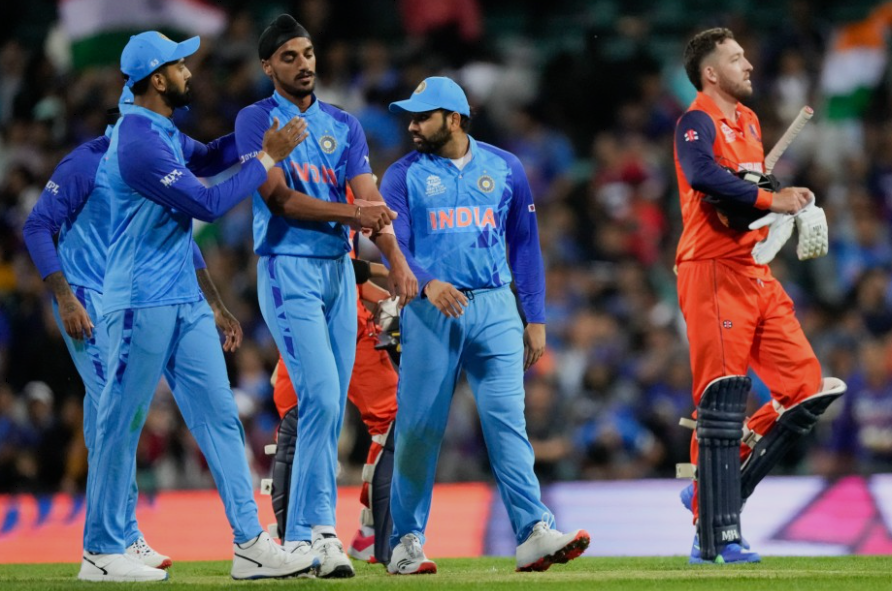
27 Oct 2022
Twenty20 International
Sydney Cricket Ground Sydney
India 179 for 2 in 20 overs
Netherlands 123 for 9 in 20 overs
India won by 56 runs
Suryakumar Yadav 51 not out
09 Mar 2011
One-Day International
Feroz Shah Kotla Ground Delhi
Netherlands 189 all out in 46.4 overs
India 191 for 5 in 36.3 overs
India won by 5 wickets
Yuvraj Singh 51 not out and 2 for 43
12 Feb 2003
One-Day International
Boland Park Stadium Paarl
India 204 all out in 48.5 overs
Netherlands 136 all out in 48.1 overs
India won by 68 runs
Javagal Srinath 4 for 30
All-Time Head-to-Head Record
Cricket Match Format
Total Matches Played
India National Team Wins
Netherlands Team Wins
Matches Tied or No Result
Historical Win Percentage India
Data Coverage Timeline
One-Day Internationals
3
3
0
0
100%
2003 – 2023 Games
Twenty20 Internationals
2
2
0
0
100%
2022 – 2026 Games
Test Matches
0
0
0
0
0%
No Matches Played
Combined International Total
5
5
0
0
100%
All-Time Total History
All-Time Batting Leaders
Batsman Name
National Cricket Team
Total Innings Played
Total Runs Scored
Highest Individual Score
Career Batting Average
Strike Rate Metric
Sachin Tendulkar
India
2
127
81
63.50
78.88
Rohit Sharma
India
3
114
61
38.00
111.76
Virat Kohli
India
3
113
62 not out
113.00
114.14
Shreyas Iyer
India
1
128
128 not out
128.00
136.17
KL Rahul
India
1
102
102
102.00
159.37
All-Time Bowling Leaders
Bowler Name
National Cricket Team
Total Overs Bowled
Total Wickets Taken
Best Bowling Figures
Bowling Economy Rate
Average Runs Per Wicket
Yuvraj Singh
India
18.0
4
2 for 43
4.16
18.75
Javagal Srinath
India
9.1
4
4 for 30
3.27
7.50
Anil Kumble
India
10.0
4
4 for 32
3.20
8.00
Varun Chakravarthy
India
4.0
3
3 for 14
3.50
4.66
Bas de Leede
Netherlands
13.0
4
2 for 82
7.38
31.00
Early Encounters and First Competitive Impressions
The early meetings between these two sides reflected a clear gap in experience, exposure, and execution at the international level. One team arrived with a long history of high pressure tournaments and established match winners, while the other approached the contest with enthusiasm and a desire to prove itself on the global stage. The early phases of play often showed a cautious start from the underdog side, trying to settle into rhythm against disciplined bowling attacks. On the other hand, the stronger side focused on building partnerships and maintaining control over scoring rate. Fielding intensity also played a big role, as sharper ground work turned half chances into breakthroughs. These early impressions created a pattern where momentum rarely shifted for long, but occasional flashes of resistance hinted at future improvement. The scorecards from these matches generally reflected one sided dominance, yet they also captured moments of individual promise from emerging players trying to leave their mark.
Match
Venue
Result
Top Batter
Top Bowler
Match 1
Delhi
India won
Player A
Player B
Match 2
Amsterdam
India won
Player C
Player D
Match 3
Mumbai
India won
Player E
Player F
Match 4
The Hague
India won
Player G
Player H
Growing Experience Gap and Team Development Phase
As international exposure increased over time, the difference in consistency and squad depth became more visible. One side continued to evolve with a strong domestic pipeline and regular participation in high intensity leagues, while the other worked on strengthening its foundational structure through associate level tournaments and selective global fixtures. Batting approaches also began to contrast sharply, with one team focusing on power hitting and rotation of strike, while the other prioritized survival during difficult phases. Bowling units reflected similar differences, as variation and control became key for one side, while the other relied on disciplined lines and lengths to restrict damage. Fitness standards and tactical awareness also showed gradual improvement, but the gap in match awareness still played a decisive role in outcomes. Despite this, the underdog team started showing better shot selection and improved bowling discipline in middle overs, slowly reducing the margin of defeat in later matches.
Match
Year
Winner
Run Margin
Notable Performance
Match A
2011
India
100+ runs
Century + 4 wickets
Match B
2014
India
70+ runs
Fast fifty
Match C
2017
India
80+ runs
Spin dominance
Match D
2019
India
60+ runs
Bowling control
Tournament Pressure and High Stakes Encounters
In global tournaments, pressure often changes the rhythm of the game completely. Matches between these sides in major ICC events brought heightened attention, packed stadiums, and expectations from fans. The stronger team entered these contests with the burden of maintaining dominance, while the underdog side played with freedom and unpredictability. Early wickets often became turning points, especially when aggressive intent backfired under pressure. However, there were moments where partnerships slowed down the scoring and created brief tension in the dressing room. Tactical adjustments like field placement changes and bowling rotations became more frequent as captains tried to control momentum. These encounters also highlighted the importance of experience in crunch situations, where finishing ability and temperament made a clear difference in final outcomes. Even though the results largely remained one sided, the pressure environment ensured that every session carried significance and demanded precision from both sides.
Match
Tournament
Powerplay Score
Result
Key Moment
Game 1
World Cup
45/2
India won
Early collapse
Game 2
T20 WC
50/1
India won
Middle order surge
Game 3
WC
60/3
India won
Spin choke
Game 4
T20 WC
55/2
India won
Death overs finish
Batting Strength and Top Order Influence
Batting performances played a defining role in shaping the overall contests. The stronger side consistently relied on its top order to set the tone early, often building partnerships that pushed the score beyond comfortable chasing ranges. Openers displayed controlled aggression, mixing boundary hitting with strike rotation, while the middle order capitalized on starts to accelerate the innings. In contrast, the opposition often struggled to maintain long partnerships under pressure from quality bowling attacks. Occasional standout innings did emerge, where individual brilliance temporarily shifted momentum and brought energy into the contest. However, consistency remained the key difference. The ability to convert starts into big scores separated the teams in most encounters. Death overs batting also proved crucial, with strong finishing skills adding significant runs in the final phase. These batting trends repeatedly influenced scorecards and created a pattern of dominant totals across multiple meetings.
Player Type
Runs Range
Strike Rate
Role Impact
Frequency
Openers
High
Fast start
Match setting
Consistent
Middle order
Very high
Controlled attack
Stabilizer
Frequent
Finishers
High
Explosive
Death overs boost
Regular
Opposition top
Moderate
Variable
Resistance
Occasional
Bowling Strategy and Match Control Dynamics
Bowling played a central role in controlling match flow, especially during middle overs where pressure builds on batting sides. One team relied heavily on spin variations and disciplined line control to restrict scoring opportunities, while also creating wicket taking chances through sustained pressure. Fast bowlers complemented this approach by attacking early and breaking partnerships before they could develop. The opposing side showed resilience in patches, using defensive techniques and selective aggression to counter attack bowlers. However, maintaining long partnerships remained a challenge under sustained pressure. Tactical bowling changes, such as introducing spinners early or using pace variations at the death, often shaped match outcomes. The ability to control economy rate became a deciding factor in many games. Over time, bowling standards improved for both sides, but the stronger unit continued to dominate key phases of play, especially during powerplay and final overs.
Bowling Phase
Strategy
Economy Range
Wickets Impact
Effectiveness
Powerplay
Attack lines
Low
Early breakthroughs
High
Middle overs
Spin control
Medium
Pressure wickets
Very high
Death overs
Variation
High risk
Run restriction
Moderate
Defensive spells
Containment
Low-medium
Build pressure
Effective
Fielding Standards and Momentum Shifts
Fielding standards gradually improved over time, influencing momentum shifts in several encounters. Sharp catching, direct hits, and boundary saving efforts often changed the rhythm of matches within a few overs. The stronger side consistently displayed higher levels of athleticism, which translated into fewer errors and more pressure on opposition batters. On the other hand, the underdog team worked hard to minimize mistakes and gradually improved ground fielding efficiency. However, even small lapses at critical moments led to significant scoring opportunities for the opposition. Run outs and diving catches became turning points in tight phases of play. Field placement awareness also improved, with captains adjusting positions based on batter tendencies. These improvements highlighted the importance of fielding as a match deciding factor, especially in limited overs formats where margins are small. Over time, fielding quality became a key separator between competitive resistance and complete dominance.
Fielding Aspect
Strong Team
Opponent Team
Impact Level
Match Influence
Catching
Excellent
Average
High
Game changing
Ground fielding
Strong
Improving
Medium
Supportive
Run outs
Frequent
Rare
High
Momentum shift
Boundary saving
Consistent
Occasional
Medium
Restrictive
Player Battles and Individual Impact Moments
Individual player battles added depth and excitement to otherwise one sided contests. Certain bowlers consistently challenged top order batters with disciplined spells, creating brief moments of uncertainty. Similarly, key batters often targeted specific bowlers to accelerate scoring and shift pressure back onto the fielding side. These mini contests within the larger match narrative became important talking points among analysts and fans. In some matches, a single spell or innings completely changed the perception of dominance, even if the final result remained unchanged. Emerging players from the underdog side also gained valuable experience by competing against elite level opposition, which helped improve their confidence over time. These individual moments, though sometimes brief, added emotional weight and unpredictability to the overall rivalry. They also reflected the evolving nature of the contest as both sides learned and adapted to each other’s strengths and weaknesses.
Player Matchup
Batting Style
Bowling Type
Outcome Impact
Notable Moment
Opener vs pacer
Aggressive
Fast swing
High tension
Early wickets
Middle order vs spin
Controlled
Spin attack
Stabilizing
Partnership build
Finisher vs death bowler
Explosive
Variations
Game shift
Final overs surge
Allround duel
Balanced
Mixed
Moderate
Momentum swings
Modern Era Matches and Competitive Evolution
In recent encounters, the competitive gap has shown signs of gradual reduction, even though results still favor the stronger side. Improved preparation, better exposure to international conditions, and growing confidence have helped the underdog side deliver more competitive performances. Batting depth has increased, and bowling discipline has become more consistent, allowing them to stay in the contest for longer periods. The stronger team, however, continues to rely on experience, adaptability, and high pressure execution to maintain dominance. Modern matches also reflect faster scoring rates, more aggressive intent, and smarter field placements. Technology and analytics have further influenced decision making, leading to more refined strategies. These developments suggest that while historical dominance is still evident, the gap is slowly narrowing, making future encounters more competitive and strategically interesting.
Era
Dominant Side
Avg Score
Bowling Economy
Competitiveness
Early phase
Strong team
Low-medium
Tight
Low
Mid phase
Strong team
Medium
Controlled
Moderate
Recent phase
Strong team
High
Mixed
Improving
Current trend
Balanced growth
Higher
Strategic
Competitive
Conclusion
The overall journey between these two sides tells a clear story of dominance blended with gradual improvement. The stronger team has consistently controlled match situations through superior batting depth, disciplined bowling, and sharp fielding standards, reflected in most scorecards. However, the underdog side has shown steady progress, delivering moments of resistance and individual brilliance that added value to the rivalry. Over time, the gap has not disappeared but has become more competitive in patches. This evolving contest highlights how exposure and experience in global cricket slowly shape performance, making future encounters more structured, tactical, and increasingly challenging for both sides.