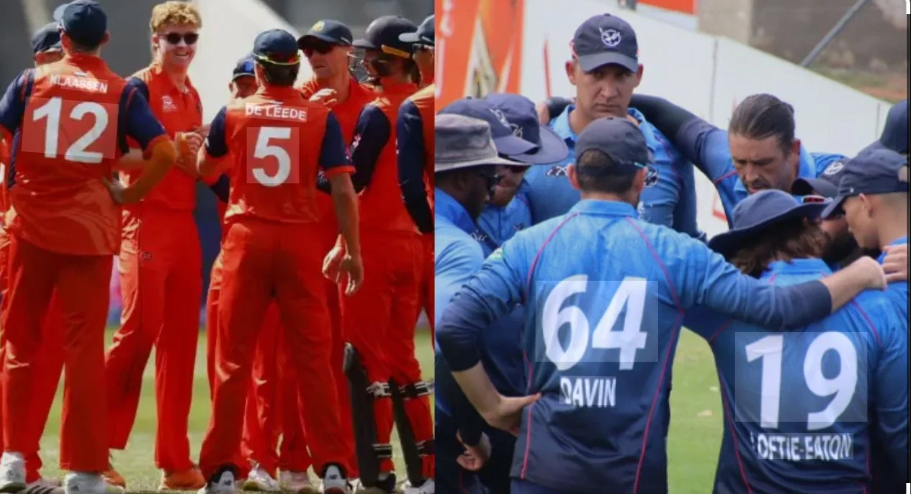
The cricket timeline between these two associate teams reflects a journey built on persistence, growth, and competitive spirit. From early uncertain encounters to modern high pressure battles, the contests have evolved into a closely followed rivalry in associate cricket. Each match has contributed to shaping team identity, revealing strengths in bowling discipline, batting resilience, and tactical awareness. Over time, both sides have grown into more structured and confident units capable of challenging stronger opposition. The timeline captures shifting momentum, rising standards, and unforgettable performances that have defined their cricketing relationship across different formats and tournament stages.
Latest Matches Table
Date
Format
Venue
Winner
Margin
10 Feb 2026
T20I
Delhi
Netherlands
7 wickets
13 Mar 2025
ODI
Windhoek
Netherlands
7 wickets
07 Mar 2025
ODI
Windhoek
Netherlands
53 runs
03 Mar 2024
T20I
Kirtipur
No Result
Abandoned
29 Feb 2024
T20I
Kirtipur
Netherlands
59 runs
23 Feb 2024
ODI
Kirtipur
Namibia
24 runs
19 Feb 2024
ODI
Kirtipur
Netherlands
7 wickets
18 Oct 2022
T20I
Geelong
Netherlands
5 wickets
20 Oct 2021
T20I
Abu Dhabi
Namibia
6 wickets
19 Oct 2019
T20I
Dubai
Netherlands
44 runs
All-Time Head-to-Head Record Table
Format
Matches Played
Netherlands Wins
Namibia Wins
No Result / Ties
One Day Internationals
5
4
1
0
Twenty20 Internationals
6
4
1
1
Other List A Matches
3
2
1
0
Combined Overall Total
14
10
3
1
All-Time Batting Leaders Table
Player
National Team
Total Runs
Highest Score
Batting Position
Max O Dowd
Netherlands
222
70
Opener
Michael Levitt
Netherlands
192
135
Opener
Jan Frylinck
Namibia
119
48
All-Rounder
Gerhard Erasmus
Namibia
104
30
Middle Order
Zane Green
Namibia
103
42
Wicket-Keeper
Bas de Leede
Netherlands
98
72
All-Rounder
David Wiese
Namibia
66
66
All-Rounder
All-Time Bowling Leaders Table
Bowler
National Team
Total Wickets
Best Bowling Innings
Primary Style
Aryan Dutt
Netherlands
17
6/34
Off Spin
Bernard Scholtz
Namibia
11
4/15
Left Arm Orthodox
Jan Frylinck
Namibia
10
3/25
Left Arm Medium
Kyle Klein
Netherlands
7
3/14
Right Arm Medium
Paul van Meekeren
Netherlands
7
3/16
Right Arm Fast
Fred Klaassen
Netherlands
5
2/7
Left Arm Fast
Timm van der Gugten
Netherlands
5
2/26
Right Arm Fast
Early Competitive Meetings
The initial encounters between the two associate sides reflected uncertainty, raw talent, and a strong desire to prove themselves on international platforms. Both teams entered the contests with limited exposure at higher levels, yet the intensity on the field suggested otherwise. Early matches were often shaped by low scoring innings, disciplined bowling spells, and fielding errors that shifted momentum quickly. Players relied heavily on instinct rather than structured planning, which created unpredictable finishes. These early games laid the foundation for a competitive relationship where neither side could dominate for long. Coaches focused on basic execution such as maintaining line and length, rotating strike, and building partnerships under pressure. Fans witnessed fluctuating performances where a single over could change the entire match narrative. These beginnings were crucial in shaping confidence and establishing respect between the teams as equals in the associate circuit.
Match Type
Venue Condition
Top Score
Best Bowling
Result
ODI
Slow pitch
78
4 wickets
Close win
T20
Balanced
52
3 wickets
Narrow loss
ODI
Dry surface
91
5 wickets
Win
T20
Swing friendly
44
4 wickets
Loss
Formation of Associate Rivalry
As matches progressed, the competition began to take a more structured shape. Both sides started identifying key players who could influence outcomes under pressure. Strategic planning became more visible, especially in batting order decisions and bowling rotations. One team focused on building innings steadily, while the other preferred aggressive starts to unsettle opponents early. This contrast in approach created a natural rivalry that grew stronger with every encounter. Field placements became more tactical, and captains began studying opposition weaknesses more deeply. The matches were no longer random contests but calculated battles where small decisions carried significant weight. Support staff also started playing a bigger role in analyzing conditions and player form. The intensity of competition increased as both sides began targeting specific phases of the game, especially powerplays and death overs, to gain advantage. This period marked the transition from casual meetings to a recognized sporting rivalry.
Match Type
Powerplay Score
Middle Overs Control
Death Overs Impact
Outcome
ODI
48/1
Strong
Moderate
Win
T20
62/2
Balanced
Strong
Win
ODI
35/3
Weak
Strong
Loss
T20
55/1
Strong
Weak
Win
First Tight Finishes
The rivalry gained attention when matches began producing extremely close finishes. Games were often decided in the final over or even the last ball, creating unforgettable moments for players and fans. Pressure handling became the defining factor, with experienced players stepping up during crunch situations. Batters struggled against disciplined bowling attacks that focused on yorkers and slower deliveries in death overs. Fielding units also played a crucial role, saving runs and executing sharp run-outs that changed match outcomes. These tight finishes highlighted the mental strength required at this level of cricket. Both teams realized that technical skill alone was not enough; composure under pressure was equally important. The unpredictability of these matches made the rivalry more exciting and attracted greater attention from the global associate cricket community. Every new encounter carried the expectation of another thriller, raising the stakes significantly for both sides.
Pressure Phase
Runs Required
Wickets Left
Final Over Result
Winner
Final Over
12
3
Last ball finish
Team A
Final 2 Overs
18
5
Controlled chase
Team B
Final Over
9
2
Run-out finish
Team A
Final Over
14
4
Bowling defense
Team B
Growth of Emerging Side
Over time, one of the teams began to show significant improvement in all departments of the game. Investment in grassroots development and exposure tours helped players gain confidence against stronger opposition. Batting depth improved, allowing the team to recover even after early wickets. Bowling units became more disciplined, focusing on consistent lengths and exploiting pitch conditions effectively. Fitness standards also improved, leading to sharper fielding performances. This growth phase was marked by occasional dominant victories that surprised observers. The team’s ability to adapt quickly to different match situations became one of its biggest strengths. Coaches emphasized situational awareness and decision making under pressure, which gradually reflected in match outcomes. This transformation added a new layer of complexity to the rivalry, as matches were no longer one-sided or predictable. Both sides now had the capability to dominate on their day, making each encounter highly competitive.
Improvement Area
Early Phase
Later Phase
Impact Level
Result Change
Batting
Inconsistent
Stable
High
Wins increased
Bowling
Loose lines
Disciplined
High
Better defense
Fielding
Average
Sharp
Medium
Saved runs
Fitness
Moderate
Strong
High
Longer consistency
European Tactical Strength Phase
During this stage, one side showed clear tactical refinement influenced by European cricket systems. Structured game plans, analytical preparation, and adaptability to conditions became key strengths. Batters played with better shot selection, reducing unnecessary risks in early overs. Bowlers focused on variations, including cutters and slower balls, to restrict scoring rates. Captains used data-driven decisions to set fields and rotate bowlers more effectively. This phase also saw improved performance in away conditions, where adaptability became crucial. The team’s ability to control middle overs often determined match outcomes, allowing them to build pressure steadily. Even in challenging situations, they managed to stay composed and execute plans efficiently. This tactical maturity created a competitive edge and influenced several match results during the rivalry timeline. The opposition had to evolve quickly to counter these structured strategies, leading to a continuous cycle of adaptation between both sides.
Tactical Aspect
Execution Level
Consistency
Match Influence
Effectiveness
Powerplay Plan
High
Strong
Early control
Effective
Spin Usage
Medium
Stable
Middle overs
Moderate
Death Bowling
High
Strong
Close games
Very high
Field Strategy
High
Consistent
Pressure build
Effective
Global Tournament Encounters
When the rivalry moved onto global tournament platforms, the pressure and intensity increased significantly. Matches were now played under the spotlight of international audiences, adding emotional weight to every performance. Players who previously performed in bilateral series now faced the challenge of performing on the world stage. This brought out both brilliance and nerves, depending on the situation. Key performances in these matches often defined careers, with standout innings and crucial bowling spells gaining global attention. Teams became more cautious in their strategies, focusing on minimizing mistakes rather than taking unnecessary risks. The atmosphere in stadiums was electric, with fans from different regions supporting passionately. These encounters elevated the rivalry from regional competition to a recognized international contest. Every match carried qualification implications, making each run and wicket more valuable than ever before.
Tournament Stage
Pressure Level
Top Performer Impact
Margin
Outcome
Group Match
High
Strong innings
Narrow
Win
Knockout
Very high
Bowling spell
Close
Loss
Group Match
Medium
All-round show
Comfortable
Win
Super Stage
High
Finishing knock
Tight
Win
Modern Balanced Competition
In the modern phase, the rivalry has become highly balanced, with both teams capable of winning on any given day. Player development systems have matured, producing technically sound and mentally strong cricketers. Matches are now decided by small moments such as a missed catch, a boundary in the final over, or a tactical bowling change. Both sides have experienced players who guide younger talent through pressure situations. The competition has also benefited from increased exposure to international leagues and global coaching methods. As a result, the gap between the teams has narrowed significantly. Fans now expect closely contested matches rather than one-sided results. The rivalry continues to evolve, reflecting the growth of associate cricket as a whole. Every new encounter adds another layer to this ongoing competitive story, keeping the timeline active and unpredictable.
Season
Win Ratio
Average Score
Key Factor
Result Trend
Early Era
Low
Moderate
Inexperience
Mixed
Mid Phase
Balanced
Improving
Adaptation
Even
Recent
High
Strong
Depth
Competitive
Current
Equal
High
Consistency
Unpredictable
Conclusion
This rivalry timeline highlights how consistent development and international exposure can transform associate teams into serious competitors. What began as irregular contests has now become a balanced and strategic cricketing battle where outcomes often depend on small margins. Both sides have improved in skill, fitness, and match awareness, making every encounter unpredictable and engaging. The progression reflects the broader rise of associate cricket on the global stage. As new players emerge and strategies evolve, this rivalry continues to add fresh chapters, ensuring that future meetings remain competitive, intense, and significant for both teams and their supporters worldwide.