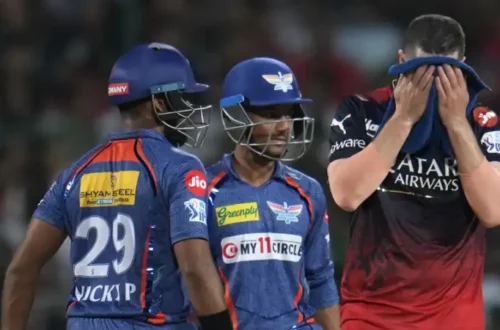
Cricket matches between a dominant international side and an emerging team always bring an interesting contrast of skill, experience, and pressure handling. One team usually arrives with a strong legacy, deep batting order, and world class bowling attack, while the other enters with determination and a desire to prove itself on the global stage. These encounters are not just about results but also about learning, adaptation, and growth. Every over reflects a gap in experience, but also highlights improvement in approach and confidence. Fans witness different levels of strategy, execution, and temperament that shape the overall flow of the match.
Latest Matches
Date
Tournament
Venue
Format
Winner
Margin
19 September 2025
ACC Men’s T20 Asia Cup
Abu Dhabi, UAE
T20 International
India
21 runs
18 November 2025
Asia Cup Rising Stars
Doha, Qatar
T20 (India A)
India A
6 wickets
23 October 2024
ACC Emerging Teams Asia Cup
Al Amerat, Oman
T20 (India A)
India A
6 wickets
03 November 2024
Hong Kong Cricket Sixes
Hong Kong
Six-a-side Exhibition
Oman
6 wickets
All-Time Head-to-Head Record
Format
Matches Played
India Wins
Oman Wins
Ties
No Result
Win Percentage India
Win Percentage Oman
T20 International
1
1
0
0
0
100.00%
0.00%
Other Formats
3
2
1
0
0
66.67%
33.33%
Total Combined
4
3
1
0
0
75.00%
25.00%
All-Time Batting Leaders
Player
Team
Matches
Innings
Runs
Highest Score
Average
Strike Rate
50s
100s
Aamir Kaleem
Oman
3
3
92
64
46.00
133.33
1
0
Sanju Samson
India
1
1
56
56
56.00
124.44
1
0
Tilak Varma
India
1
1
51
51
51.00
170.00
1
0
Hammad Mirza
Oman
2
2
79
51
39.50
141.07
1
0
Abhishek Sharma
India
1
1
38
38
38.00
253.33
0
0
Ayush Badoni
India
1
1
51
51
51.00
170.00
1
0
Jatinder Singh
Oman
3
3
43
21
14.33
102.38
0
0
All-Time Bowling Leaders
Player
Team
Matches
Overs
Maidens
Runs Allowed
Wickets
Best Bowling
Economy Rate
Average
Shah Faisal
Oman
2
7.0
0
54
3
2/27
7.71
18.00
Aamir Kaleem
Oman
3
9.0
0
68
3
2/32
7.55
22.66
Nishad Sipra
Oman
1
4.0
0
36
2
2/36
9.00
18.00
Ramandeep Singh
India
1
2.0
0
22
1
1/22
11.00
22.00
Ravi Bishnoi
India
1
4.0
0
34
1
1/34
8.50
34.00
Aqib Ilyas
Oman
2
5.0
0
41
1
1/19
8.20
41.00
Sufyan Mehmood
Oman
1
4.0
0
28
1
1/28
7.00
Cricketing Gap and Background
The early stage of encounters between a dominant cricket nation and an emerging side usually begins with a clear performance gap. One team enters with years of elite competition experience, structured domestic systems, and exposure to high pressure tournaments, while the other is still developing its international identity. This difference reflects directly in match intensity, decision making, and execution under pressure. Stronger teams generally dictate the pace from the first over, while emerging sides focus on survival and learning. However, modern cricket has slightly reduced this gap due to better coaching, analytics, and global exposure through franchise leagues. Even so, technical differences in shot selection and bowling control remain visible. These matches are not just contests but also development benchmarks for emerging teams. They help identify weaknesses, build resilience, and understand elite level standards. Over time, such encounters become a foundation for growth and future competitiveness in international cricket.
Area
Stronger Team Standard
Emerging Team Standard
Gap Level
Impact
Experience
Very high
Limited
Large
Decision making
Batting control
Structured aggression
Defensive approach
Medium
Scoring rate
Bowling quality
Advanced variations
Basic consistency
High
Wickets
Pressure handling
Elite level
Developing
High
Match outcome
Early Encounters and First Impressions
In the initial phase of meetings, the stronger side usually asserts dominance through disciplined bowling and aggressive batting. Early matches often show one-sided scorecards where emerging teams struggle to build partnerships. The stronger team uses these encounters to test bench strength and refine tactical combinations. For the emerging side, these matches serve as learning experiences against high quality pace and spin attacks. Batters often find it difficult to rotate strike, leading to pressure buildup and eventual collapse. Bowlers from stronger teams maintain tight lines, forcing mistakes and creating wicket opportunities. Despite results, these early games play an important role in shaping long-term development. Each match highlights specific weaknesses that need improvement, especially in handling pressure situations. Over time, small improvements in batting stability and bowling control begin to appear, showing gradual progress in competitiveness.
Match Phase
Stronger Team Approach
Emerging Team Approach
Key Outcome
Match Effect
Powerplay
Early attack
Defensive start
Wickets fall
Momentum shift
Middle overs
Control game
Survival focus
Low scoring
Pressure build
Death overs
Finish strong
Limited resistance
Big margins
One sided result
Learning impact
Strategy testing
Experience gain
Development
Long term growth
Growth of Emerging Cricket Structure
Over time, emerging cricket nations have significantly improved their overall structure and performance standards. Investments in coaching, training facilities, and international exposure have helped players develop stronger technical foundations. Participation in global franchise leagues has also played a major role in improving confidence and adaptability. Batters now show better ability to handle pace variations and spin conditions compared to earlier years. Bowlers have added new variations such as slower balls and cutters to remain competitive. However, consistency remains a major challenge, especially when facing top ranked opposition. Mental pressure often affects shot selection and bowling execution in crucial moments. Fielding standards have also improved, with increased athleticism and sharper reflexes. These developments indicate a positive trend, even if the gap with elite teams still exists. The progress suggests that future encounters will be more balanced and competitive than before.
Development Area
Earlier Standard
Current Standard
Improvement Level
Remaining Issue
Batting
Basic defense
Controlled attack
High
Consistency
Bowling
Predictable
Variation based
Medium
Accuracy
Fielding
Average
Athletic
High
Stamina
Strategy
Simple
Tactical awareness
Medium
Experience
Tactical Control by Stronger Teams
Tactical execution plays a key role in determining match outcomes when two teams are at different development stages. Stronger teams rely heavily on structured plans that focus on early breakthroughs and sustained pressure. Captains adjust field placements dynamically to restrict scoring options and force errors. Bowling rotations are carefully designed to exploit weaknesses in technique and temperament. Emerging teams, however, often struggle to adapt quickly to these tactical changes. This leads to reactive gameplay rather than proactive decision making. Stronger sides maintain control by limiting boundary opportunities and increasing dot ball pressure. Batting units also adapt quickly to pitch conditions, ensuring stability throughout the innings. This tactical superiority creates a continuous cycle of pressure that is difficult to break. Over time, it becomes a defining factor in match dominance and scoreline differences.
Tactical Element
Stronger Team Execution
Emerging Team Execution
Effectiveness
Result Impact
Field setup
Aggressive control
Defensive gaps
High
Pressure build
Bowling plan
Targeted attack
Reactive changes
High
Wickets
Batting order
Flexible strategy
Fixed approach
Medium
Stability
Game awareness
Fast reading
Slow adaptation
High
Momentum loss
Powerplay Phase Impact
The powerplay overs are often the most decisive part of limited overs cricket. Stronger teams use this phase to establish early dominance through aggressive yet calculated batting. Openers focus on maximizing scoring opportunities while minimizing risk. This creates immediate scoreboard pressure on the opposition. Emerging teams tend to prioritize wicket preservation, which often results in slower scoring rates. Bowlers from stronger sides exploit early movement conditions effectively, taking quick wickets. Fielding setups are also highly attacking, increasing pressure on new batters. This phase frequently determines whether the match becomes competitive or one sided. A strong powerplay performance sets the tone for the rest of the innings. In contrast, early setbacks often force emerging teams into recovery mode for the remainder of the match.
Powerplay Factor
Stronger Team Output
Emerging Team Output
Match Influence
Pressure Level
Strike rate
High
Low
Momentum control
High
Wickets lost
Minimal
Frequent
Stability gap
High
Field pressure
Aggressive
Defensive
Control shift
Medium
Run flow
Fast
Slow
Match direction
High
Middle Overs Stability Phase
Middle overs represent the stage where matches are either stabilized or completely controlled. Stronger teams use this phase to consolidate their position while maintaining pressure through disciplined bowling. Spin bowlers play a major role by restricting scoring opportunities and creating wicket chances. Field placements become tighter, reducing easy singles and forcing risky shots. Emerging teams attempt to rebuild through partnerships but often struggle against consistent pressure. Shot selection becomes a critical factor during this phase. Stronger teams also rotate bowlers strategically to maintain rhythm and control. This ensures that scoring never fully accelerates for the opposition. The middle overs often highlight the difference in tactical maturity between the two sides. Teams that dominate this phase usually maintain control until the end of the innings.
Middle Overs Factor
Stronger Team Strategy
Emerging Team Strategy
Outcome
Match Effect
Run control
Tight discipline
Irregular scoring
Low total
High pressure
Partnerships
Strong rebuild
Fragile stands
Stability issue
Medium
Spin impact
Dominant control
Struggles
Wicket loss
High
Risk level
Balanced
Forced shots
Collapse risk
High
Death Overs Finishing Phase
The final overs of a limited overs match often define the final score difference between teams of unequal strength. Stronger sides execute this phase with precision, combining aggressive hitting with smart strike rotation. Finishers play a key role in maximizing runs during the last few overs. Emerging teams often struggle due to inconsistent bowling execution and lack of experience under pressure. Missed yorkers and fielding errors contribute to higher run leakage. On the batting side, weaker teams also fail to accelerate effectively when chasing big targets. Stronger teams use this phase to either push totals beyond reach or finish chases comfortably. This phase reflects both technical skill and mental strength under pressure. It often becomes the final turning point that seals the match outcome.
Death Overs Factor
Stronger Team Execution
Emerging Team Execution
Result
Impact
Boundary hitting
High frequency
Limited success
Big totals
Match control
Bowling accuracy
Controlled execution
Inconsistent lines
Run leakage
High
Pressure handling
Strong mindset
Errors under pressure
Collapse
Critical
Final outcome
Clinical finish
Unstable end
Clear margin
Decisive
Conclusion
In the end, these contests show how cricket evolves when experience meets ambition. The stronger side often dominates through consistency, tactical awareness, and execution under pressure, while the emerging team gains valuable lessons that help build its future foundation. Even in one sided scorelines, there are moments of resilience and learning that matter beyond the result. Over time, such matches contribute to narrowing the gap in international cricket and improving global competitiveness. They remind fans that every encounter is part of a larger journey of growth, progress, and rising standards in the game.