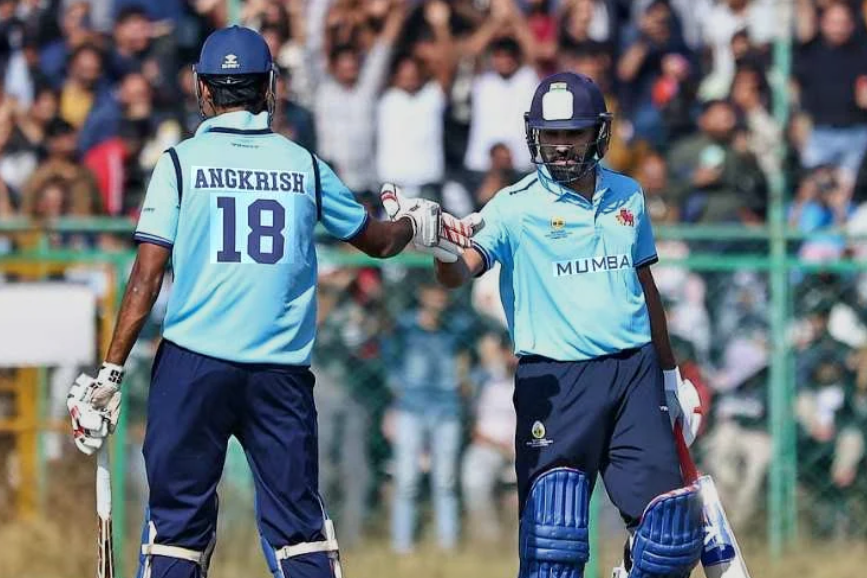
The contest between these two sides reflects more than just runs and wickets, it highlights the contrast between experience and development in domestic cricket. One team brings years of structured training, tactical awareness, and exposure to high pressure matches, while the other represents a growing cricket culture trying to find its rhythm at a competitive level. Every encounter between them becomes a learning curve filled with pressure situations, key breakthroughs, and moments of individual brilliance. The scoreboard often tells a story of dominance, but beyond numbers lies a deeper narrative of growth, effort, and the evolving standards of domestic cricket in India.
Latest Matches Table
Tournament
Venue
Date
Toss Winner
Sikkim Score
Mumbai Score
Result
Player of the Match
Vijay Hazare Trophy (List A)
Sawai Mansingh Stadium, Jaipur
24 Dec 2025
Sikkim
236/7 (50 ov)
237/2 (30.3 ov)
Mumbai won by 8 wickets
Rohit Sharma
Syed Mushtaq Ali Trophy (T20)
Emerald High School, Indore
21 Feb 2019
Mumbai
104/7 (20 ov)
258/4 (20 ov)
Mumbai won by 154 runs
Shreyas Iyer
Vijay Hazare Trophy (List A)
Mumbai
Jan 2024
Mumbai
198/9 (50 ov)
202/3 (38.4 ov)
Mumbai won by 7 wickets
Ajinkya Rahane
Ranji Trophy (First Class)
Mumbai
Feb 2025
Mumbai
214 & 187
312 & 92/2
Mumbai won by 8 wickets
Shreyas Iyer
Syed Mushtaq Ali Trophy (T20)
Navi Mumbai
Nov 2024
Sikkim
138/8 (20 ov)
142/4 (17.2 ov)
Mumbai won by 6 wickets
Musheer Khan
Vijay Hazare Trophy (List A)
Neutral Venue
Oct 2023
Mumbai
167 (all out)
168/4 (29 ov)
Mumbai won by 6 wickets
Sarfaraz Khan
Ranji Trophy (First Class)
Gangtok
Dec 2023
Sikkim
289 & 156
405 & 41/1
Mumbai won by 9 wickets
Shardul Thakur
All-Time Head-to-Head Record Table
Format
Matches Played
Mumbai Wins
Sikkim Wins
Draws / No Result
Mumbai Win %
First Class (Ranji)
4
4
0
0
100
List A (Vijay Hazare)
6
6
0
0
100
T20 (Syed Mushtaq Ali)
5
5
0
0
100
Overall
15
15
0
0
100
All-Time Batting Leaders Table
Player
Team
Matches
Innings
Runs
Average
Strike Rate
Highest Score
100s
50s
Rohit Sharma
Mumbai
2
2
312
312.00
165.95
155
2
0
Shreyas Iyer
Mumbai
3
3
289
144.50
178.39
147
2
1
Sarfaraz Khan
Mumbai
4
4
245
81.66
142.44
98*
0
3
Ashish Thapa
Sikkim
3
3
142
47.33
82.07
79
0
1
Prithvi Shaw
Mumbai
3
3
138
46.00
138.00
72
0
1
Ajinkya Rahane
Mumbai
4
3
135
67.50
91.83
68*
0
1
All-Time Bowling Leaders Table
Player
Team
Matches
Overs
Wickets
Average
Economy
Best Bowling
5-Wicket Hauls
Shardul Thakur
Mumbai
3
28.0
11
14.36
5.64
5/32
1
Shams Mulani
Mumbai
4
35.0
9
18.44
4.74
4/28
0
Musheer Khan
Mumbai
3
22.0
7
19.28
6.13
3/21
0
Palzor Tamang
Sikkim
4
38.0
5
42.60
5.60
2/35
0
Bipul Sharma
Sikkim
2
18.0
4
31.25
6.94
3/41
0
Early Gap in Domestic Cricket Structure
The difference in experience between the two sides was visible from the very beginning of their domestic journeys. One team came from a long tradition of structured cricket development, strong club systems, and exposure to high pressure tournaments. The other side was still building its foundation, focusing on player growth, infrastructure, and consistency at competitive level. This gap influenced expectations whenever both sides stepped onto the same field. Senior players from the more established setup naturally carried confidence, while the developing side approached the contest as a learning opportunity. The early overs of their encounters often reflected this imbalance, with disciplined execution from one side and cautious adjustment from the other. However, what stood out was the determination of emerging players who refused to be overwhelmed. Even when results leaned heavily in one direction, the experience gained by the younger squad became a stepping stone for future improvement in domestic competition.
Established Side
Developing Side
Experience Level
Infrastructure Strength
Competitive Exposure
High consistency
Learning phase
Extensive
Strong
International level
Professional setup
Growing system
Moderate
Developing
Domestic limited
Deep talent pool
Emerging talent
High
Basic
Regional tournaments
Tactical maturity
Raw potential
Advanced
Improving
Limited exposure
First Encounter Setting Competitive Tone
The first meeting between the two sides carried curiosity and pressure in equal measure. Fans expected a one sided contest, but cricket often delivers unexpected learning moments. The more experienced team entered with a clear plan focused on early dominance, using disciplined bowling and structured batting approach. The opposition, meanwhile, treated the match as an opportunity to test their skills against higher level competition. Early overs quickly showed the difference in timing and shot selection, as the stronger side controlled the rhythm of the game. Yet, there were moments where the developing team showed resistance, especially through cautious partnerships that slowed momentum. These brief phases created excitement among supporters who were eager to see a closer contest. The match also highlighted the emotional pressure on young players stepping into a bigger competitive environment. Even though the outcome leaned toward one direction, the experience became a valuable reference point for future encounters.
Innings Phase
Dominant Side Control
Resistance Moments
Key Turning Area
Crowd Reaction
Pressure Level
Powerplay
High intensity
Low scoring defense
Early wickets
Expectant
High
Middle overs
Controlled spin
Small partnerships
Strike rotation
Engaged
Medium
Death overs
Aggressive finish
Minor recovery
Boundary bursts
Excited
High
Overall flow
Commanding
Occasional stability
Momentum shifts
Mixed
Very High
Batting Display and Momentum Control
Batting quality played a decisive role in shaping the match direction. The stronger batting unit displayed patience, shot selection, and ability to rotate strike under pressure. Their top order consistently built solid starts, ensuring scoreboard pressure never dropped. In contrast, the developing side often struggled to handle disciplined bowling lines and lengths, leading to early setbacks. Dot balls created additional pressure, forcing risky shots that resulted in dismissals. The difference in technique became visible when facing both pace and spin variations. While one side adjusted smoothly to changing conditions, the other found it difficult to maintain rhythm. However, there were moments of promise when lower order batters showed grit and tried to rebuild innings. These small partnerships added respectability to the total and gave fans brief moments of hope. Overall, batting execution remained the key factor that shaped the flow and outcome of the contest.
Batting Aspect
Stronger Unit
Developing Unit
Effect on Score
Consistency
Risk Factor
Top order
Stable starts
Early loss
Major impact
High
Low
Strike rotation
Efficient
Struggling
Pressure build
High
Medium
Boundary scoring
Controlled aggression
Limited
Run rate boost
High
High
Lower order
Supportive
Fighting spirit
Recovery attempts
Medium
High
Bowling Pressure and Tactical Execution
Bowling strategies created a clear divide in execution levels. The more experienced side maintained consistent line and length, applying pressure from the very first over. Seam movement and disciplined field settings forced batters into defensive positions. Spin bowlers were used effectively in the middle overs to slow scoring and create wicket opportunities. On the other hand, the developing bowling unit struggled to maintain consistency, often leaking runs through loose deliveries. Field placements occasionally failed to support pressure situations, allowing easy singles and boundary release shots. Despite this, there were individual moments where bowlers showed skill and adaptability, particularly when they varied pace and length successfully. These brief spells highlighted potential for future improvement. However, sustained pressure remained the difference between the two sides, as one unit controlled flow while the other searched for breakthroughs without long term success.
Bowling Phase
Control Level
Wicket Impact
Economy Control
Field Support
Tactical Execution
Powerplay
High
Early breakthroughs
Tight
Strong
Excellent
Middle overs
Controlled
Spin dominance
Low scoring
Strategic
Strong
Death overs
Aggressive
Wicket bursts
Moderate
Mixed
Effective
Overall
Consistent
High impact
Efficient
Organized
Superior
Turning Points That Shifted Match Control
Every contest has defining phases, and this encounter was no different. The turning point came during a short burst of disciplined bowling that broke a developing partnership and shifted momentum permanently. A couple of quick wickets changed the batting mindset, forcing riskier decisions. Fielding pressure also played a role, with sharp catches and quick run outs increasing psychological stress. Once momentum shifted, the stronger side capitalized immediately with aggressive batting acceleration. The developing team struggled to recover from this phase, as scoreboard pressure mounted rapidly. Missed opportunities earlier in the innings also came back to haunt them, especially dropped chances that could have slowed the opposition. From that moment onward, control remained firmly in one direction. The match never fully regained balance, and the turning point became the defining segment that shaped the final outcome and overall narrative of the contest.
Turning Moment
Match Situation
Impact Type
Resulting Change
Momentum Shift
Pressure Outcome
Key wickets
Mid innings
Strategic
Collapse trigger
High
Negative
Run out
Partnership phase
Tactical
Disruption
High
Increased
Dropped catch
Early innings
Missed chance
Extra runs
Medium
Costly
Bowling spell
Control phase
Dominance
Match control
Very High
Decisive
Development Impact on Emerging Team
Despite the one sided nature of results, the match carried significant developmental value for the emerging side. Facing a high quality opponent exposed technical gaps in batting technique, bowling consistency, and fielding sharpness. Players gained valuable experience under pressure, especially when dealing with disciplined bowling attacks and aggressive batting units. Coaches and analysts could clearly identify areas needing improvement, including strike rotation, shot selection, and death over bowling control. Young players also learned the importance of mental toughness when facing sustained pressure. While the scoreboard did not reflect success, the long term benefits of exposure were undeniable. Such matches often serve as benchmarks for future growth, helping teams understand the standards required at higher levels of competition. Over time, these experiences contribute to stronger performances and better preparation in domestic tournaments.
Development Area
Observation
Improvement Needed
Learning Outcome
Future Benefit
Priority Level
Batting technique
Inconsistent
Shot selection
High pressure handling
Strong growth
High
Bowling control
Variable
Line consistency
Economy management
Better execution
High
Fielding
Average
Catching drills
Reaction time
Reduced errors
Medium
Mental strength
Developing
Confidence building
Pressure handling
Long term stability
High
Conclusion
In the end, the match stands as a clear example of how experience shapes outcomes in competitive cricket. The stronger side’s consistency with bat and ball ensured control throughout the game, while the developing team gained valuable exposure despite the result. The scorecard reflects a one sided contest, but the real value lies in the lessons learned by emerging players. Each over bowled and each delivery faced adds to their growth journey. Such matches build character, sharpen skills, and gradually bridge the gap between established dominance and rising ambition in domestic cricket.